Databricks' Bid To Become the Center of Gravity for Enterprise Data and AI
After dozens of conversations with customers, partners, and Databricks executives at this year's Data + AI Summit, I kept coming back to one question:
What do these announcements collectively tell us about where enterprise data platforms are heading?
Plenty of event recaps cover the product announcements. I’ll cover the more interesting story of the architectural direction they reveal.
BLUF: Taken individually, Databricks announced meaningful additions across transactional databases, real-time processing, AI governance, developer tooling, agent infrastructure, and business intelligence … but together, they represent Databricks expanding to the architectural control points required to operationalize enterprise AI.
The question is whether enterprises will increasingly choose Databricks as the architectural center of gravity around which the rest of their data and AI ecosystem revolves.
Databricks Grabs More AI Operationalization Mindshare
Over the years, Databricks has moved from delivering serverless capabilities (e.g., managed Spark) to being in the token path (e.g., when you need to leverage AI, orchestrate with Databricks), which is changing market perception, valuation, and ecosystem attraction.
And Databricks' current high valuation multiple reflects its early vision that, unlike others who started on helping people analyze data, Databricks' architecture can be optimized to help software compute on data. AI is shifting enterprise workloads from human consumption to machine execution, and that original design choice increasingly favors Databricks and ties together the many announcements from last week.
The winner owns where AI executes work … and players from hyperscalers to chips to data foundations to application platforms are all angling to be where the work happens.
Interestingly, most architect conversations at the event cited Spark as a key architectural advantage (albeit, other data platforms have also embraced Spark). Spark was built for large-scale distributed computing versus reporting. That enables support for mixed workloads, from AI and agentic solutions to not only execute SQL but also support needed API calls, transform data, run Python, execute ML, orchestrate workloads, and, importantly, evaluate outputs and manage state.
In this release, Databricks showed its vision by continuing to add operational AI capabilities that run on the same computational “distributed compute and data” substrate. This includes Lakeflow, AgentBricks, Lakehouse RT, Unity Catalog, and Genie Ontology.
There’s still a trade-off: with power comes complexity, and that's why Databricks keeps the traditional separation between data scientists and engineers and data analysts who want simpler operations, easier onboarding, embedded analytics, governed sharing, and business-user adoption.
Solidifying being the “Oracle Corp for Machine workloads”
To that point, Ali has on occasion shared his vision of becoming the “Oracle” for machine workloads. The key convergence requires real-time, transactional, operational, and machine learning workloads on a single copy of data in open formats supporting all workloads with the data, latency, and performance … and hopefully at the price enterprises need.
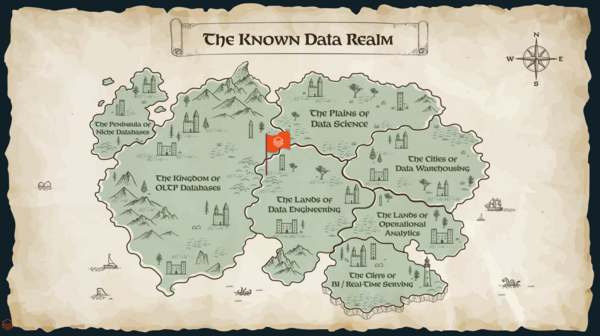
First, a nod to the Game of Thrones analogy used… or, for those older like me, the Lord of the Rings world. My CMO/data nerd heart approves. The diagram shows what were once separate worlds that Databricks is arguing to be the “One” to rule them all (see diagram below).
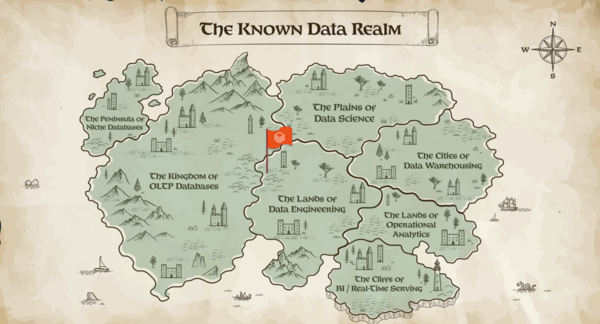
Databricks has announced multiple solutions to deliver on this part of their consolidated vision with the lakehouse as its central storage, but supporting multiple workloads:
- OLTP databases -> Lakebase tackling operational data separated from analytics, optimized on machine-centric workloads (betting that machine workloads become the majority flipping architectural centers from existing OLTP vendors)
- Data Engineering -> Lakeflow to manage batch pipelines and multiple engines
- Data Science -> Agent Bricks & Genie to support a fragmented ML platform
- Data Warehousing -> LTAP (Lake Transactional/Analytics Processing) reportedly delivering millisecond response to analytic queries to deliver on unified OLAP +OLTP on one copy of data
- Operational Analytics -> Genie One ensuring BI not disconnected from operations
- Real-Time Serving -> Lakehouse RT removing the need for different serving platform
- Niche Databases -> Vector DBs, Graph DBs, Time-series DB supported
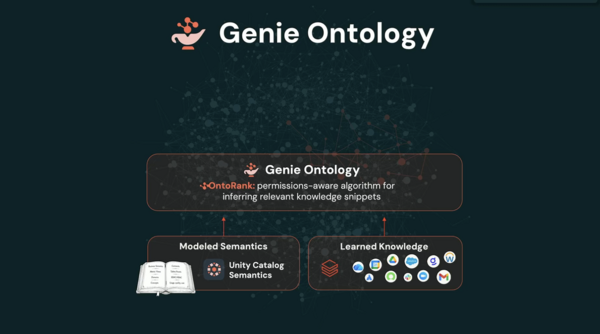
Databricks proposes a lakehouse with a shared governance model, shared storage layer, shared metadata system, and increasingly, a shared context layer.
This is not about unifying data, this is by unifying execution.
The promise of convergence is not new. Customers want reduced operational and analytic silos, AI as a first class component, and simplified AppDev. And while Databricks showed impressive performance statistics on slides, customers I spoke to are waiting for more success stories that prove scale before adopting.
Competitively, this also means Databricks is moving towards Snowflake's application ambitions, while simultaneously attacking AWS, Azure, and other operational database workloads. Competition won't roll over. You can imagine that ... welll, Oracle wants to be the Oracle for machine workloads.
Operational AI Requires Execution-Grade Context
One fun question that came up from the partner conversations was what will be the next likely “realm” for Databricks to pursue that is not yet on the “world domination” map …
My answer was that beyond operational AI needing operational data, operational AI requires execution-grade context. While not yet a “realm,” per se, I expect to see Enterprise Context to be as important as any realm to bridge catalog, context, and governance. The need for context reflects the value point moving from storing data to today understanding business meaning, to tomorrow where we will be coordinating autonomous work.
Joining the vendors announcing an automated context-building solution in 2026, Databricks announced Genie Ontology. This is a capability I look forward to testing. Genie Ontology promises to provide a shared layer leveraging AI to continuously learn business meaning and relationships and to make that metadata available to every AI application and agent. Genie Ontology extends context capture beyond traditional metadata and semantic models to use AI to monitor an Enterprises’ collaboration tools, files, emails, workflows, etc. to build a map of the business entities, relationships, identities, policies, memory, and permissions.
The first generation of AI used context to improve reasoning. The next generation will use context to constrain reasoning and authorize action
Similarly, Governance Moves From Data To Autonomous Software
Unlike AI Watchtowers and API gateway based approaches, which focused primarily on observing and securing model inference, Databricks has introduced Unity AI Gateway as part of its evolution into a governance control plane. While addressing today’s top of mind concern of unpredictable AI budgets and runaway token costs, the more interesting point to me is that Unity AI Gateway contains capabilities traditionally found in three different products: an AI Gateway, an Agent Harness/Runtime, and an AI Operations (AIOps) platform. Taken together, Databricks appears to be providing the framework for an enterprise control plane capable of governing models, agents, tools, costs, memory, traces, and policies.
Autonomous software requires more than just governance focused on permissions, lineage, compliance and ensuring trusted information was available to the right people. To govern autonomous work, governance spans selecting authoritative business context, which models are approved, which external resources can an agent invoke, what budget/spending limits apply, who has decision rights to how decisions are traced, audited and explained.
That means Unity AI Gateway begins to provide centralized AI controls as agents become distributed across the enterprise. Conversations with architects reflect converging realization that enterprise AI requires a common operational layer responsible for identity, policies, context, observability, security, and execution. This convergence is not lost on vendors so expect, regardless of how each vendor begins in terms of current solution, to build towards the same destination of trusted execution environment for autonomous work.
Let’s Not Forget Revenue Growth Via Upstack Expansion
While not about AI control planes, few industry watchers were surprised to see Databricks expand into adjacent markets. With revenue retention of 140%+ and the typical high cost of new customer acquisition, the next phase of growth comes from the traditional platform play of increasing wallet share within existing customers and expanding to new business stakeholders and departments.
This year's announcements point to three strategic expansion markets that move beyond Databricks' traditional buyers that build atop the Databricks emerging AI control plane.
1. Customer Data Platforms (CDP)
The CustomerLake announcement reflects a broader buying center shift to the CIO and the growth of composable versus monolithic CDP solutions. Customer data has moved from just a marketing asset to a core element for Enterprise AI. That has shifted the CDP buying center from the CMO to a partnership between the CMO, CDO, and even, CIO. CDP is a crowded market with 100+ CDP vendors, so Databricks will undoubtedly focus on its relative advantage selling to their install base. That ensures CustomerLake's inclusion in their customers' CDP consideration shortlists and data modernization initiatives.
2. Security information and Event Management (SIEM)
LakeWatch represents another strategic adjacency. Security teams increasingly require the same capabilities that AI workloads demand: massive data volumes, real-time analysis, streaming telemetry, long-term retention, and AI-assisted investigation. Constellation Research sees this initial release as credible solution for Databricks install base for consideration, and sees Databricks continuing to invest to improve in the next releases.
Lakewatch expands Databricks into the CISO buying center, while being a choice the CIO can support by demonstrating that the same architecture supporting enterprise AI can also power security analytics, threat detection, and operational investigations.
3. Business User solutions
The most visible announcement for business users was Genie moving from "chat with your data" to “AI coworkers.” Genie One, Genie Agents, and App Builder focus on business users building and interacting with agents without having to have deep technical skills. Customers like Albertsons and Rivian were highlighted as early example users.
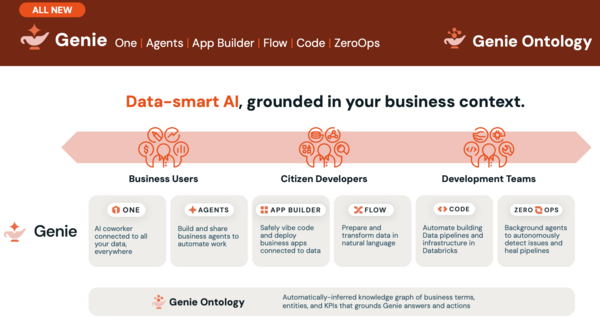
The strategic objective extends beyond usability. As we have seen over the last decades, every successful enterprise platform eventually expands from technical specialists to business users. For Databricks, this represents an opportunity to increase daily engagement while positioning itself against Microsoft Copilot, Salesforce Agentforce, and Snowflake Cortex as the business interface to enterprise AI.
The real question is where does Databricks likely stop. If they’re following Oracle’s playbook, every adjacent workload that benefits from trusted enterprise data, AI, and governance increasingly becomes fair game.
MyPOV
- Architects should prioritize "low-regret" AI investments that preserve architectural flexibility as enterprise AI platforms converge.
- Enterprise context will prove more valuable than foundation models, and Enterprises will begin to protect their budding context layer as a strategic IP/asset.
- Cost visibility and management will only become more central to 2026 enterprise buyers with runtime monitoring and controls forcing new decisions like “what level of intelligence to buy” to use for a particular workflow or problem
- Partners have a rapidly growing target market atop Databricks, but like Oracle, partners face an aggressive landlord that has to be watched on 2 fronts: (1) your margin is their market, (2) platform shifting the build vs. buy equation
- Where 2026 is about AI platforms, building agents, and delivering AI coworkers, future releases will focus on enterprise decision platforms, governance of autonomous work, and AI managed business processes
- The energy and growth of the Data + AI Summit reflects Databricks delivering on one of the hardest problems, community. The real moat is adoption, popularity, and mindshare is where a vibrant dev, data engineer, partner, and customer community is hard to build, let alone replicate.
What Should Enterprise Leaders Do Next?
2026 clearly reflects the buyer trend towards operationalizing AI beyond a POC. Below are three quick actions to take.
- Evaluate platforms based on their ability to operationalize AI, not just manage data. The differentiator is increasingly the ability to combine operational state, enterprise context, governance, and execution versus simply storage or query performance.
- Treat context and governance as strategic investments. Most organizations have invested heavily in data quality but far less in creating reusable business context and runtime controls. Those capabilities will become foundational as AI moves from assisting people to executing work.
- Plan your architecture for autonomous software, not just human analytics. Many current architectures were designed around dashboards and reports. Over the next five years, a growing share of enterprise workloads will be generated by AI agents interacting with other systems. That shift should influence your “today” platform decisions.
What did I miss? Areas you want to dig into? Reach out or put your comments below.
Michael Ni is Vice President and Principal Analyst at Constellation Research, covering the evolving Data-to-Decisions landscape—where CDOs, CIOs, and CPOs must modernize data infrastructure, integrate AI into decision-making, and scale automation to improve business outcomes. Ni’s research examines how enterprises operationalize AI, automate decision-making, and integrate data management and analytics into core business processes. He focuses on the challenges of scaling AI-driven decision systems, aligning data strategy with business goals, and the growing role of data and decisioning “products” in enterprise ecosystems. With 25+ years as a product and GTM executive across enterprise software, AI platforms, and analytics-driven technologies, Ni brings a practitioner’s perspective to…...
Read morePublished
Author