


IBM CEO Krishna touts quantum computing use cases, quantum-AI continuum
IBM CEO Arvind Krishna said quantum advantage is here this year and enterprises need to align quantum computing with their AI strategies.
"We believe quantum advantage will be reached this year," said Krishna during his IBM Think 2026 keynote. "That's not 20 years away. That's not 10 years away. That's within this year. The gap is closing faster than most people realize or appreciate.
While most of the announcements at IBM Think 2026 revolved around AI use cases and tools to manage AI agents, the biggest takeaway from the conference is that AI and quantum strategies will ultimately converge. IBM's Think 2026 conference revolved around three core vectors: AI-first enterprises, hybrid cloud architecture and the quantum frontier.
"Quantum and AI, by the way, do not compete. They converge and they complement each other. Quantum can help uncover what AI cannot yet compute. Then AI learns from the quantum," said Krishna, who emphasized that companies need to outline quantum strategies now.
IBM announced that Cleveland Clinic, RIKEN, and IBM combined Big Blue quantum computers and two of the world's most powerful supercomputers to simulate protein complexes up to 12,635 atoms. The results used an algorithm that optimized how quantum and classical computers work together. The framework, quantum-centric supercomputing, highlights quantum computing's role in potential drug discoveries.
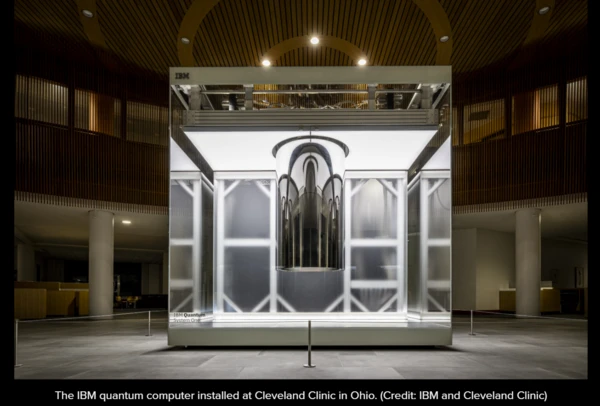
The combination of supercomputers and quantum systems featured IBM's 156-qubit IBM Quantum Heron processors, running within the IBM quantum computers at both Cleveland Clinic in the US and RIKEN in Japan. Two supercomputers, Fugaku at RIKEN and Miyabi-G, which is operated by the University of Tokyo and the University of Tsukuba, rode shotgun with the quantum systems.
"For years, quantum computing has been a promise. Now, quantum computers are producing results that matter to science," said Jay Gambetta, Director of IBM Research and IBM Fellow.
Kenneth Merz, Ph.D., lead author of the study and staff scientist in Cleveland Clinic's Computational Life Sciences Department, said crossing the 12,000-atom barrier expands "the scale of biologically meaningful molecular simulations possible with quantum computing."
- IBM delivers strong Q1, maintains outlook
- Constellation ShortList™ Quantum Full Stack Vendors
- Constellation ShortList™ Quantum Computing Platforms
- A peek at IBM's practical approach to quantum computing
IBM also highlighted its fleet of more than 80 quantum computers built and already deployed. Krishna also highlighted the Cleveland Clinic quantum deployment, the first private sector installation from 2023.
Krishna said:
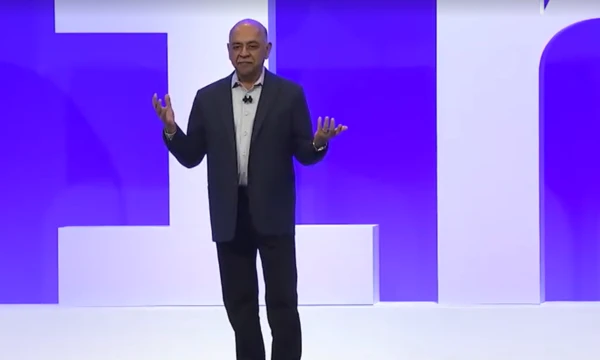
"The window to be an early mover in this emerging technology is open now, the window to be a to use it for competitive advantage will not stay open forever. So, I would urge you to sort of think about how quantum can modify and improve your enterprise."
To emphasize the point that quantum use cases are hear today, an IBM panel featured executives from Boeing as well as Allstate and TCS.
Key themes included:
- Quantum is working well for optimization of highly correlated decisions in finance, insurance and operations.
- A big use case is simulating complex materials and molecules.
- Hybrid quantum-classical workflows will dominate in the near term.
- Enterprises and governments need to get ready for post-quantum cryptography.
- Allstate said even modest improvements in optimization via quantum computing can drive financial value.
- Boeing is looking to develop corrosion resistant materials and coating.
Constellation Research analyst Holger Mueller said the role of quantum computing in IBM's keynote was telling.
"One can gauge how real quantum is by the keynote exposure that IBM gives it at its Think conference. From no mention, to later mention, to keynote speaker year ago, to claiming the CEO keynote topic with a first time customer on stage with groundbreaking work on an IBM Heron system in protein molecules. IBM executive are certain that quantum superiority will be delivered this year."

Larry Dignan is Editor in Chief of Constellation Insights at Constellation Research, where he leads editorial coverage focused on enterprise technology, digital transformation, and emerging trends shaping the future of business. He oversees research-driven news, analysis, interviews, and event coverage designed to help technology buyers and vendors navigate complex markets with clarity and context. ...
Read morePublished
Author
