


Qualtrics big plan: Digital twins of real customers to simulate, predict experiences
Qualtrics wants to simulate and predict the customer journey and experience to tie them to business outcomes. The company has enough data from decades of experience data to make it work.
In a strategic pivot, Qualtrics, which is best known for its customer and employee experience applications for everything from managing omnichannel channels, engagement and user experience, is becoming more of a data and AI platform.
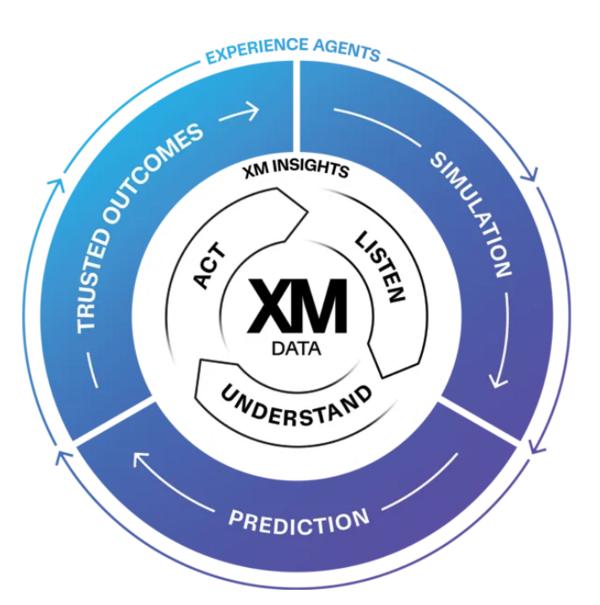
The future of Qualtrics Experience Management is the XM Data & AI Platform, which will launch in 2027. Qualtrics is leveraging its years of experience data to simulate decisions, predict and intervene to resolve problems, deliver outcomes, reduce churn, build loyalty and ultimate increase lifetime value.
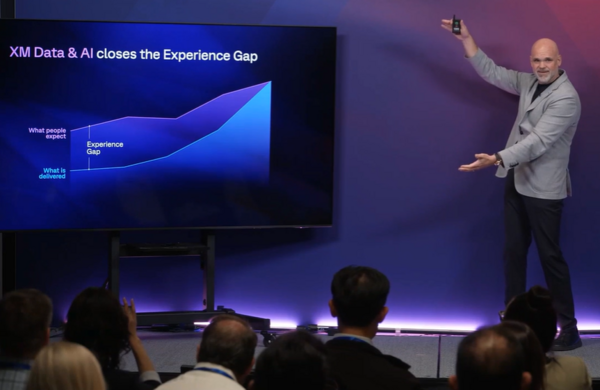
Qualtrics CEO Jayson Maynard said there's a gap between what people expect and what's delivered. This gap, dubbed the Experience Gap, has put nearly $3 trillion in sales at risk. "Experience has always been the strategy every leader believed in, but unfortunately the technology wasn’t available to execute at scale," said Maynard.
- Constellation ShortList™ Decision Intelligence Platforms
- Constellation ShortList™ Employee Experience Platforms
- Constellation ShortList™ Conversational Intelligence for Customer Service
Previously, Qualtrics' remit was to listen and measure experiences and provide insights so enterprises could understand what customers were thinking. All of that experience tracking has given Qualtrics a massive dataset and context over time.
Qualtrics also recently acquired Press Ganey Forsta, which measures healthcare experiences, for $6.75 billion. Qualtrics now can add decades of healthcare data to its platform.
A walkthrough of the Experience Gap
Speaking at an analyst event, Maynard walked through the experience gap and why it is costing enterprises so much money.
He said:
"Experience today is the business. You can make an argument that everything about your business can be copied--pricing, packaging, and manufacturing. All those things can actually be replicated. But the one thing, the competitive advantage, right? It's the emotion your customer walks away with when they had an amazing experience. That is a moat that you can't replicate."
Maynard added that expectations are rising and AI is increasing cycle times. "The gap is what you get delivered versus what an organization experiences. We call that the experience gap," said Maynard, who outlined the expectation gap with emojis.
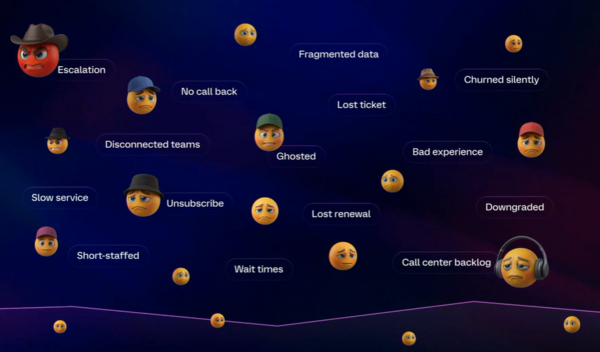
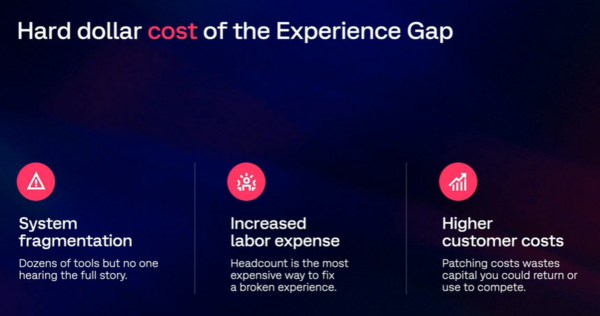
He added that the experience gap is in part the side effect from system fragmentation across the enterprise. Companies have been throwing money at the problem, but customers are still miserable. After all, those costs are being passed along.
Enterprises need to be able to address the customers that are disgruntled and leave vocally or quietly.
What's changed for Qualtrics and its datasets? "We've been trying to do this in the world of experience management for 20 years. The technology wasn't there. With AI, we're now in a position to deliver on the vision that many before have tried to solve," said Maynard.
Digital twins of real customers
Qualtrics has enough data from two decades to simulate, predict and deliver outcomes.
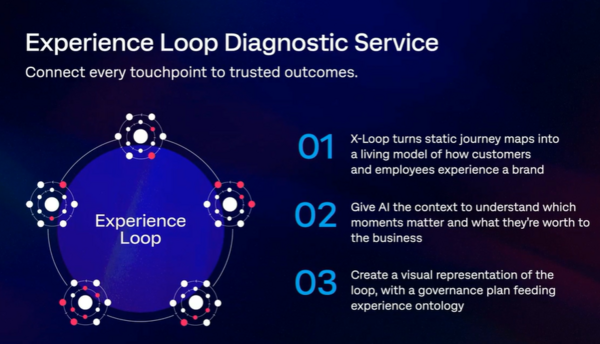
According to Qualtrics, lifetime value of customers is delivered through Experience Loops (X-loops) instead of one journey map. X-Loops evolve from acquiring loops to retaining them with multiple moments in between. X-loops are also dynamic. Context is what delivers the moments that drive the X-loop.
Here's a look at how Qualtrics is combining its data and ontology wiht AI and simulations.
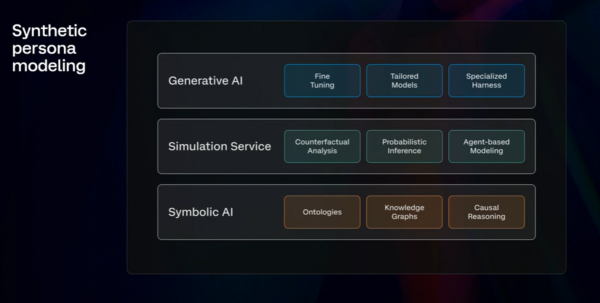
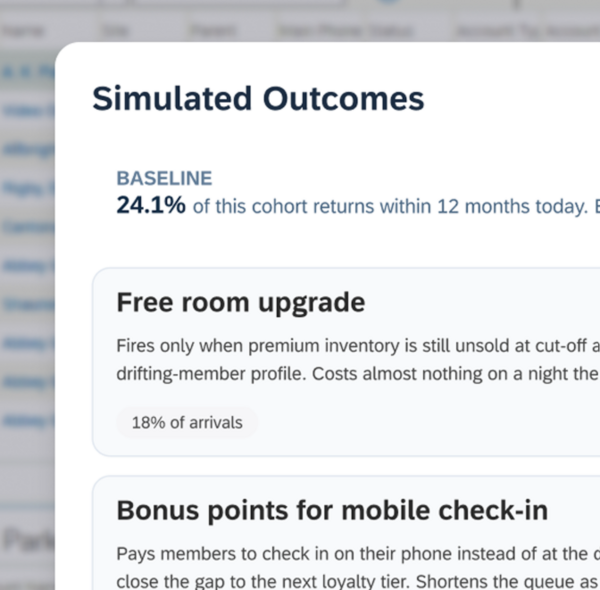
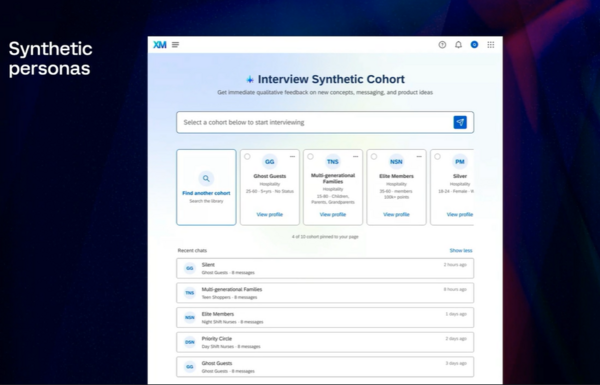
Qualtrics big plan for its platform is to generate synthetic data and build digital twins of real customers. With that digital twin, Qualtrics XM Data & AI platform will be able to do the following:
- Simulate experiences and reactions to new offerings and pricing and policy changes. Qualtrics said it will be able to deliver research-grade simulations fine-tuned on its own research corpus.
- Predict outcomes with Experience Prediction Models, small language models trained and optimized on Qualtrics proprietary datasets and ontology. Those models will be able to predict customer satisfaction, engagement and lifetime value.
- Deliver outcomes that are governed. Qualtrics said its platform will be able to check actions against enterprise rules and policies. Experience Agents will act within those rules and a feature called Trusted Outcomes will close the loop. That moment then drives context for the system.
Qualtrics' first installment of its new XM Data & AI Platform is available now with the following:
- Experience Loop Diagnostic Service, which maps the customer lifecycle, identifies missing data and surfaces disconnected systems. Qualtrics XM Advisors will deliver a defined relationship map of the experience as it operates, a visual model of the X-loop moments and a governance and roadmap to activate.
- Reputation Experience, which tracks what customers say publicly and creates a channel to acquire customers. Reputation Experience brings that data into the XM suite and connects it to data and context. Responses from companies can be managed across Google, Yelp and Facebook in the brand's voice. Reputation Experience also requires a services package.
Maynard said the new features are already included in the XM suite pricing.
Larry Dignan is Editor in Chief of Constellation Insights at Constellation Research, where he leads editorial coverage focused on enterprise technology, digital transformation, and emerging trends shaping the future of business. He oversees research-driven news, analysis, interviews, and event coverage designed to help technology buyers and vendors navigate complex markets with clarity and context. ...
Read morePublished
Author
