


Rigetti Computing CEO: Quantum advantage 4 years away
Rigetti Computing said its 36-qubit multi-chip quantum computer is generally available and outlined a plan to build a 100-qubit system with 99.5% fidelity by the end of 2025, but quantum advantage is likely 4 years away.
The technology milestones and outlook were outlined as Rigetti reported second quarter results that missed estimates.
Rigetti reported a second quarter net loss of $39.7 million, or 13 cents a share, on revenue of $1.8 billion, down from $3.09 million a year ago. Wall Street was expecting Rigetti to report a second quarter loss of 4 cents a share on revenue of $1.87 million
The company said second quarter revenue was impacted by the expiration of the national quantum initiative and pending reauthorization in the US Congress.
Quantum computing is an immature industry that generates a lot of headlines but many pure plays are just building revenue streams. Contracts--often with government agencies--are lumpy and so are the quarterly results. Given the boom in quantum stocks, many of the quantum computing vendors have been able to fortify balance sheets and raise cash.
For instance, Rigetti ended the second quarter with $576.1 million in cash and equivalents. IonQ also fortified its balance sheet with a $1 billion stock offering in July. IonQ, which has been on an acquisition spree, reported second quarter earnings last week with a net loss of $177.5 million on revenue of $20.7 million. IonQ had $1.6 billion of pro forma cash and equivalents as of July 9.
Speaking on a conference call with analysts, Rigetti CEO Dr. Subodh Kulkarni said the company's chiplet approach is scaling.
The company's Cepheus-1-36Q system is generally available on the Rigetti Quantum Cloud Services Platform and coming to Microsoft Azure. The system has reduced error rates from the Ankaa-3 system that preceded it and hits a median two-qubit gate fidelity of 99.5%.
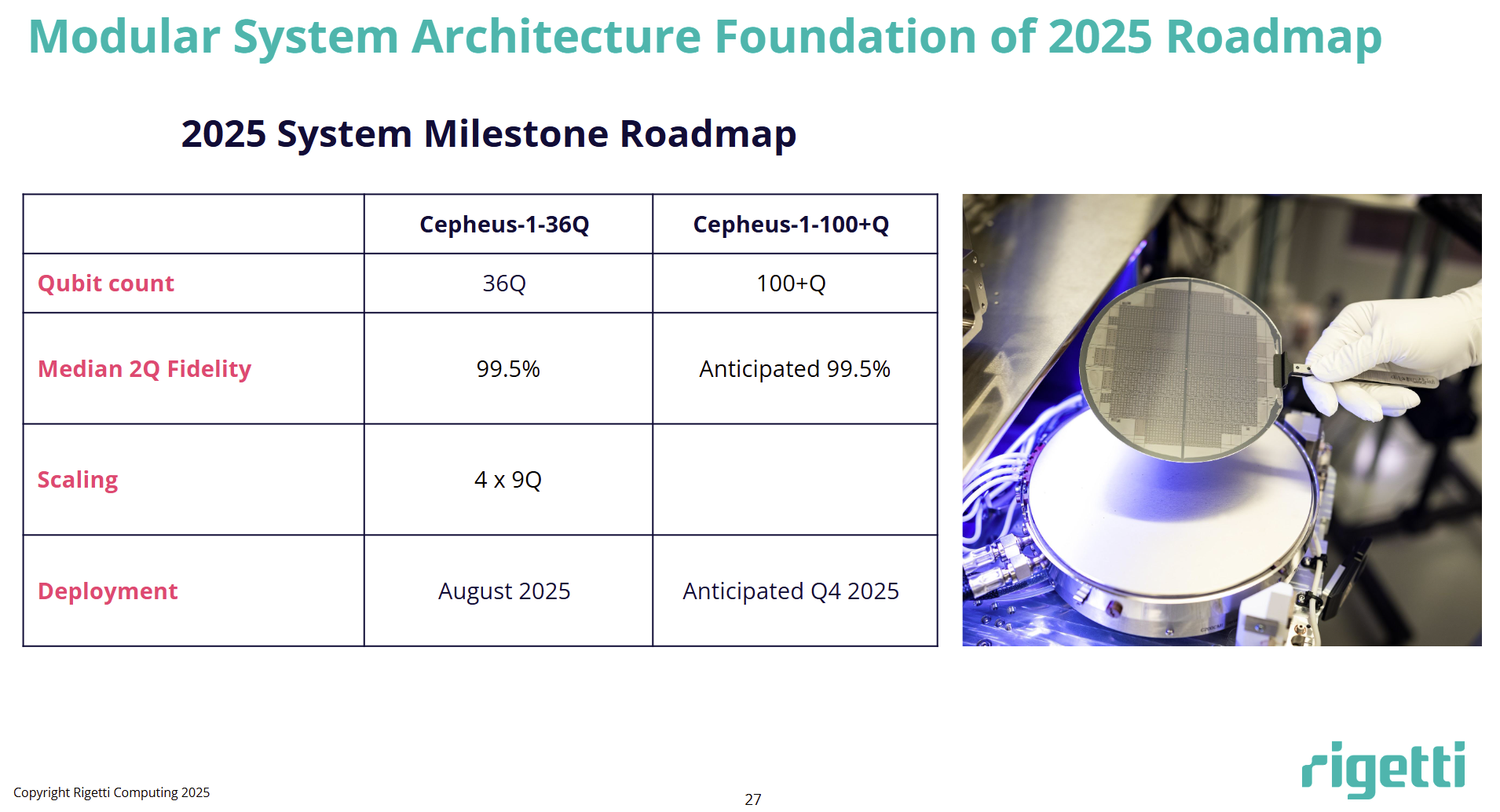
"Just 6 months after our record performance with Ankaa-3, we've once again halved our error rates with Cepheus-1-36Q. We believe quadrupling our chiplet count and significantly decreasing error rates is the clear path towards quantum advantage and fault tolerance. We intend to continue this momentum with our 100 plus qubit system planned for the end of the year," said Kulkarni.
Rigetti is betting on superconducting qubits as the ultimate leading technology for quantum computing. Other vendors have bet on competing technologies.
Kulkarni has been largely hype free when it comes to quantum computing. He noted that there are multiple challenges before quantum advantage is reached including dilution refrigerators and cabling as well as error correction.
He said:
"At this point, we believe we are still about 3 to 4 years away from getting to the 1,000-plus qubit, 99.9% fidelity with error correction and gate speeds of less than 50 nanoseconds, which is when we achieve quantum advantage. If we can accelerate that time line using our strengthened balance sheet we will obviously look at that. We are still looking at roughly about 4 years to get to that quantum advantage point."
- Constellation ShortList™ Quantum Computing Platforms | Quantum Computing Software Platforms | Quantum Full Stack Players
- CxOs need to focus on quantum computing readiness, not the noise
Key points from the earnings call from Kulkarni:
- "It's our view that superconducting qubits are the leading modality for quantum computers due to their ability to scale and their ability to achieve gate speeds more than 1,000x faster than other modalities like ion traps and pure atoms."
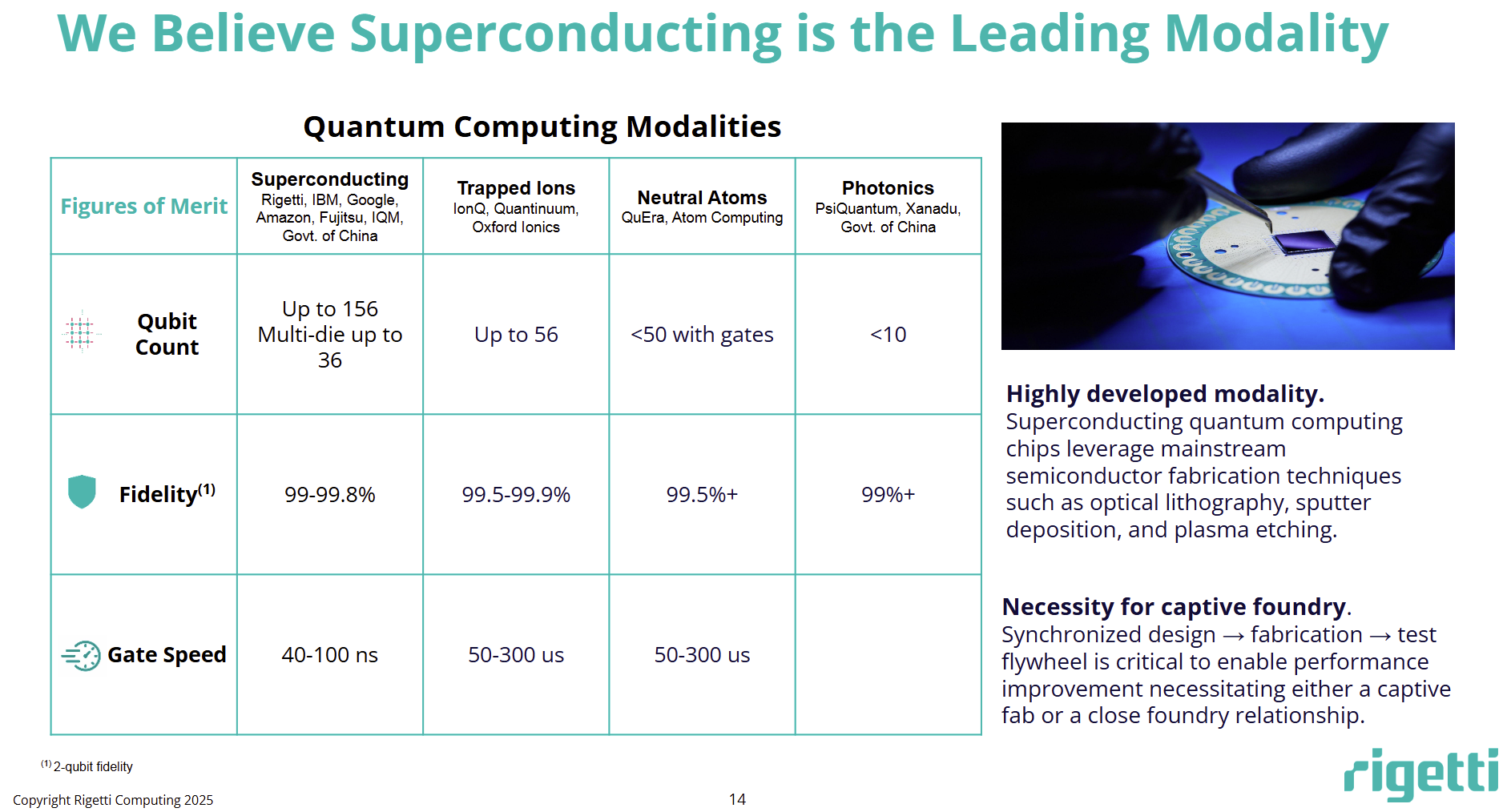
- "Transitioning from a monolithic chip to chiplets enables greater control over chip uniformity, which in turn improves performance. Leveraging chiplets also reduces manufacturing complexity and improves fabrication yield."
- "While we are pleased with our sequential growth in quarterly revenues, we believe achievement of our technology milestones remains a key metric to achieving our long-term success."
- "Our focus continues to be on R&D development. We will obviously look at every opportunity to accelerate our time line. Right now, we believe we are funding R&D adequately to hit the milestones that we have laid out. Our plan for the end of the year is to deliver a multichip 100- plus qubit system with 99.5% 2-qubit gate fidelity. And from there on to continue to increase the fidelity as well as qubit count using chiplet approach. Every opportunity we get to accelerate that time line, we continue to look at it and we will do so."
Larry Dignan is Editor in Chief of Constellation Insights at Constellation Research, where he leads editorial coverage focused on enterprise technology, digital transformation, and emerging trends shaping the future of business. He oversees research-driven news, analysis, interviews, and event coverage designed to help technology buyers and vendors navigate complex markets with clarity and context. ...
Read morePublished
Author
