


Quantinuum fleshes out quantum software stack with open source Guppy, Selene
Quantinuum launched new open source software as it builds out its quantum computing stack.
The company launched two software components that it has open sourced. The launches include:
- Guppy, an open-source language hosted inside Python. Guppy enables quantum computing programming above the gate level using conditional logic and the ability to incorporate any quantum error correction code.
- Selene, which is an emulator that models realistic, entangled quantum behavior. The goal is to make quantum software research and development easier.
Quantinuum is prepping its software stack for the launch of Helios, the company's next-gen quantum computer. Helios will require a new software stack that can speed up quantum computing use cases.
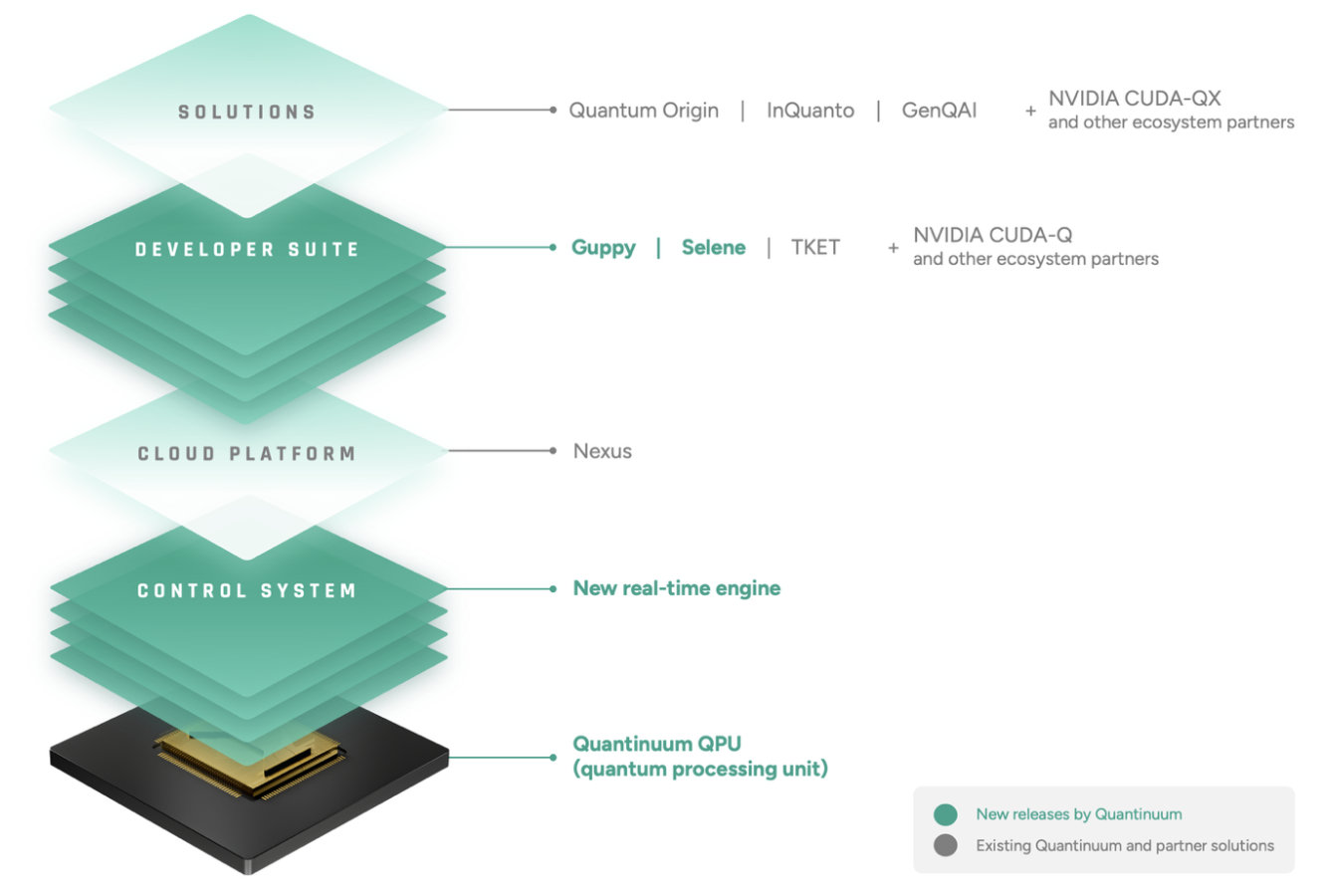
Guppy and Selene will join TKET, an open-source tool kit for developers and Nexus, a platform to access quantum computing systems. Going forward, Guppy will run software applications on new systems. TKET will be used to optimize Guppy programs. Nexus will be the primary vehicle to accessing Quantinuum hardware, support Guppy and provide access to Selene.
- Quantinuum, partners create true verifiable randomness, eye quantum computing for cybersecurity
- Quantinuum launches generative AI quantum framework, sees quantum computing as synthetic data generator
Key points:
- Guppy treats quantum programs as structured and dynamic software and features common programming constructs.
- Guppy optimizes qubit resource management automatically.
- Selene is designed to help developers build quantum applications when hardware access is limited.
- Selene also supports multiple simulation options including Nvidia GPUs and cuQuantum.
Research: Constellation ShortList™ Quantum Computing Platforms | Quantum Computing Software Platforms | Quantum Full Stack Player
Larry Dignan is Editor in Chief of Constellation Insights at Constellation Research, where he leads editorial coverage focused on enterprise technology, digital transformation, and emerging trends shaping the future of business. He oversees research-driven news, analysis, interviews, and event coverage designed to help technology buyers and vendors navigate complex markets with clarity and context. ...
Read morePublished
Author
