A Case Study in Radical Empathy: The Leadership of Zoho CEO Sridhar Vembu
What does it mean to lead? This was a central question as Constellation Research analysts gathered (virtually) to vote for chief executive officer (CEO) of the year for our annual Enterprise Awards. The nominees all steered their businesses through periods of massive upheaval and opportunity. Each one was tested beyond the traditional ups and downs of an average year. As Constellation considered each nomination, with all attributes listed and ranked, time and again the conversation came back to qualities of leadership that are often hard to quantify—elements such as empathy.
Empathy is defined as the ability to understand and share in the feelings of another. Radical empathy is the act of pushing oneself beyond understanding. It asks people to step outside their comfort zone of emotional spectatorship to feel so intensely and acutely that they are forced into action to improve the state of another person. It could be argued that 2020 pushed CEO empathy to new heights as leaders were compelled to better understand the impact of everything from a global pandemic to calls to address systemic racism and equality.
In 2020, empathy felt easy to spot. Spotting radical empathy was far more difficult.
Enter Sridhar Vembu, CEO and co-founder of Zoho, who has joined the likes of Apple’s Tim Cook and Microsoft’s Satya Nadella as leaders actively investing in radical empathy. Vembu approaches leadership and business with a vision that, much like the company he founded, has helped him to purposefully achieve success in his own unique way and in his own time.
Doing Things the “Zoho Way”
Zoho is far from being a “traditional” technology company. In fact, Vembu likely would correct anyone daring to lump Zoho into a traditional mold. Zoho is a “development company,” to quote Vembu, developing technology while developing relationships with customers and communities alike. Unlike with the fast-moving venture-capital-backed technology unicorns of Silicon Valley, the growth of Zoho has been a slow burn, taking its own time in its own way without sacrificing what Vembu openly calls his and the company’s freedom.
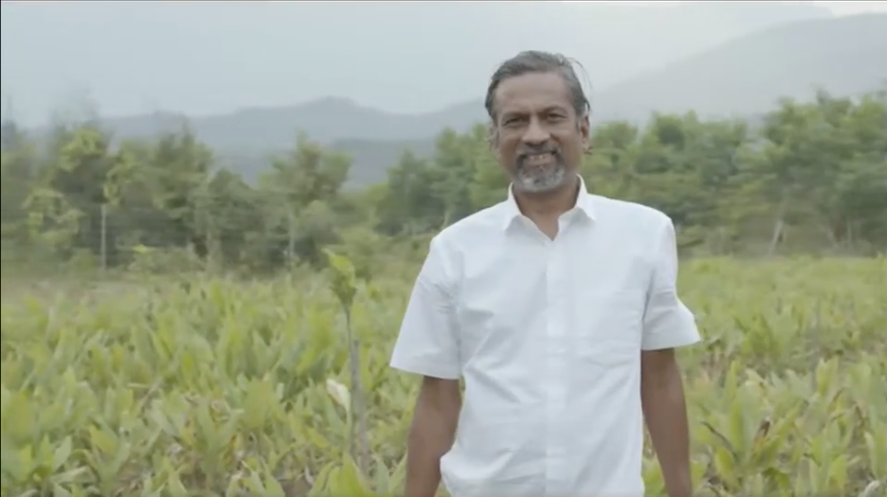 “I’m running this company, but not running it in a traditional way,” mused Vembu in a recent conversation. “That would not be possible. Instead, I focus on creating the philosophical and cultural glue that holds the company together so people can make their own decisions. It is not the traditional way, but it is the Zoho way.”
This ethos permeates across the organization from Chennai to California. Vembu doesn’t chase the spotlight for personal gain or glory, instead using his carefully crafted pulpit to advocate for issues he sees as core to the human experience—which, in turn, has an impact on Zoho’s ability to develop the products that power Zoho customers’ businesses. As Zoho’s chief “cultural glue” engineer, Vembu has set the foundation and developed a cadre of smart, capable leaders who take his lead and “pay it forward” to empower, train, and motivate legions of employees, partners, and customers, all motivated to innovate and iterate at and with Zoho. His actions and activism aren’t random acts of kindness, but opportunities to strategically challenge the status quo.
Lessons From Leading the “Vembu Way”
This idea of a “Zoho way” is as much a reflection of Vembu as it is a reflection of the decades-long work that has gone into building a technology brand that now employs more than 9,000 people around the world. For Zoho, every decision feels like an opportunity to rethink and challenge the system, to chart a new path branded with Zoho’s unique culture and perspective. But make no mistake, that is not accidental.
In the same way that Zoho has developed its own way, so has its CEO. The two paths are intertwined, with one way inspiring and shaping the other, but they are not identical. Whereas Zoho operates as a nontraditional global enterprise, Vembu leads as a nontraditional leader—the “Vembu way.” His leadership and reliance on radical empathy sheds light on some key best practices that sit at the core of his role as CEO.
Live How You Lead
The first time I heard Vembu’s vision for Zoho was in early 2020, before the pandemic had taken hold of daily life. Vembu described what a day in the life of the Zoho CEO included, beginning with a bike ride to the office, down the rows of farms and fields in Mathalamparai, a village with an estimated population of around 2,500. He shared how he was living proof of his “rural revival” strategy, talking to a room full of sometimes-jaded industry analysts about how topsoil, heirloom potatoes, and the plight of the rural farmer were analogous to the challenges of modern business.
This vision of a rural revival wasn’t intended just for his own life but rather a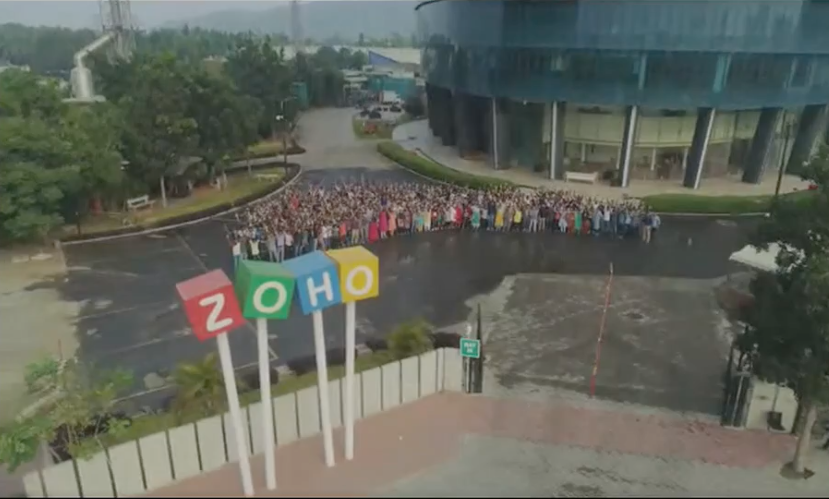 s a corporate vision for all of Zoho that would include a massive shift of the company’s U.S.-based headquarters from the clogged, costly, and congested Pleasanton, California, area to Austin, Texas. In the costly trappings of Silicon Valley, people were choosing to put off life milestones. Vembu, instead, believes it is the responsibility of a company to ensure that its people never have to postpone those life events. “For our employees, not being able to afford to buy a home was a tax on their well-being that in turn becomes a tax on the company. Companies should assist you in being able to live life to the fullest, being able to do the things you want to do,” he told me. Because of this, moving to Austin made perfect sense. But in the early days of the decision, some questioned his leadership in moving away from the resources of Silicon Valley.
Vembu shifted Zoho’s U.S. center of gravity to an Austin farm in early 2020, months before big corporate names would announce “revolutionary,” “bold,” and even “transformative” moves to Texas in what would be called a Bay Area exodus. Vembu’s leadership is more about feeling and absorbing than about rash reactions to trends. This has empowered the entire organization to be ahead of curves—even curveballs—that life has thrown, focused on establishing a culture that empowers each employee to get the most out of life. It has also given Zoho permission to grow by removing the limitations of proximity to headquarters. As a result, customers, from small local businesses to large, globally distributed enterprises, benefit from the proximity of local teams that understand the unique needs of local businesses and a distributed network of partners all connected to the central culture and infrastructure of Zoho.
Be Present
For Vembu, the concept of presence isn’t a matter of being in a room when the big speeches are made or big moments unveiled. It is more about being in the room when the hardest decisions are being made and remaining in the moment to be open and willing to answer the questions about why a decision was made. “The hard decisions are still hard,” reflected Vembu. “I do plead guilty to postponing hard decisions or pretending that if I just ignore them, they will go away. But I do have to make those decisions.”
 In the face of what others might consider uncomfortable—looking a team in the eyes and explaining tough decisions—Vembu chooses to be present, refusing to delegate the work of breaking news after decisions and instead using the moment to speak with people in what he calls “his own voice” to eliminate a pattern of rationalization and corporate jargon.
For great leaders, being present isn’t just about listening without distraction or a momentary exercise in mindfulness. It is about being ready to be on the receiving end of all good or bad news, to be an equally active participant in the celebration and in the problem-solving. Being present is not about control; in fact, it is the opposite. “I don’t want to be in that command-and-control mindset all the time, because it destroys my own personal freedom,” noted Vembu. “Whenever decisions weigh on you, you start to measure success by how long the line is outside your door. Real power is not being trapped by a power structure that you have built yourself.”
Solutions Are Rerouted Problems
Vembu is many things—brother, father, CEO, teacher—but at his core he is still an electrical engineer, looking for creative solutions to problems as opposed to using brute force with no imagination. No matter the situation, Vembu is on a perpetual investigation to reach a better state. Take, for example, his realization that talent was a resource in increasingly short supply. Instead of jumping into the wage wars of Silicon Valley, where lofty college degrees are the cost of entry to high-earning development positions, Vembu and Zoho implemented a program to hire bright, skilled, and eager talent without college degrees.
Zoho Schools, started as Zoho University, is a classic case of reverse engineering a problem and then rerouting circuits to achieve a brighter output. “If you don’t set out to create talent, there will always be a talent shortage,” Vembu said. “We have an issue where companies fail to invest in people. They fail to invest in employees, giving employees an opportunity to succeed and an opportunity to earn gratitude. This same lacking was at the core of our reason for launching Zoho University, investing in our future talent. It is also the conviction that is now [driving] Zoho Schools. I would come to this village and notice that these rural students have had similar issues of nobody investing in them.”
By the numbers, the investment is working: An estimated 15 to 20% of Zoho’s workforce are graduates of the Schools initiative. The program is also expanding the Zoho business ecosystem, with an estimated 60 startups growing from the minds of the program’s graduates. This new vision of education reworks the circuitry of a broken system in which policies made in major metropolitan areas often translate to and apply in rural or remote locations—often with negative or unintended consequences. Vembu is so committed to this idea that he has taken on the role of part-time teacher in his new “experiment” of extending the evolution of education to younger-aged students who are being neglected in underresourced and underserved communities. By empowering the youngest of learners, Vembu is empowering and unearthing talent that could represent new stables of talent entering the Zoho ecosystem.
CEO of the Year
The challenge with honoring a CEO like Sridhar Vembu is giving people an idea that his style, the Vembu way, can be easily replicated. Whereas all leaders can and should aspire to be more empathetic, intentionally choosing to understand their organization’s customers, employees, and partners, not every leader is cut out for a life of radical empathy. Such a life will constantly pit the easy path to profitability against the commitments to elevate the needs of community and total strangers in far-flung rural outposts.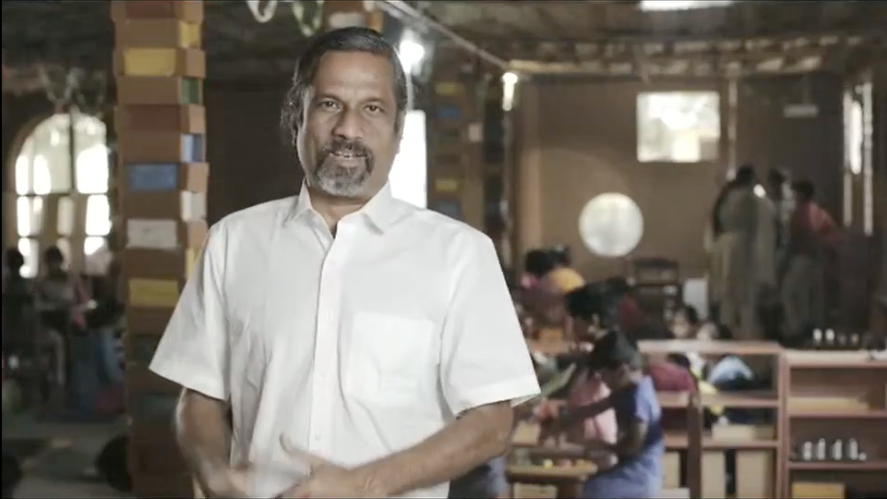
Yet throughout the chaos of 2020, Sridhar Vembu proved that radical empathy can be profitable and productive. Some might scoff at the speed of Zoho’s growth: It took its time to grow from 1 million users in 2008 to 30 million users in 2018. But we see a different trajectory—one in which the Zoho way, powered by Vembu’s radical empathy, catapulted growth, doubling users to over the 60 million mark in 2020. Users, it is worth noting, who are filled with the very gratitude and commitment Vembu has fostered across employees and students.
Vembu’s special blend of “cultural glue” has translated into tangible benefits for Zoho’s customers. Small Zoho teams innovating and collaborating deliver product updates and improvements constantly, feeling invested in their customers’ success. Small businesses receive the focus, care, and attention that massive brands would receive at massive competitors. Enterprise customers have a dedicated team well versed in the challenges and complexity of large-scale deployments and operations. Partners are treated as if their businesses were extensions of Zoho, not separate entities fighting through business challenges on their own. Being a Zoho customer means being understood, deeply and earnestly, by the individual at the top of Zoho’s org chart.
Growth, much like radical empathy, isn’t an accident. And it isn’t easy. But for Vembu, and Zoho, radical empathy is the only path conscionable. “When you go through real suffering, your life is not normal. There is a wisdom that comes from that suffering, knowing that I may not be able to do anything about my suffering, but maybe I can help other people, be they my employees, or people in the villages, in the outside world,” Vembu said. “If that is the indirect benefit from my suffering, that’s all right. It is creating good karma. And perhaps that is actually my leadership style at the end.”
About Liz Miller: Liz Miller is Vice President and Principal Analyst at Constellation, focused on the org-wide team sport known as customer experience. While covering CX as an enterprise strategy, Miller spends time zeroing in on the functional demands of Marketing and Service and the evolving role of the Chief Marketing Officer, the rise of the Chief Experience Officer, the evolution of customer engagement, and the rising requirement for a new security posture that accounts for the threat to brand trust in this age of AI. With over 30 years of marketing experience, Miller offers strategic guidance on the leadership, business transformation, and technology requirements to deliver on today’s CX strategies. She has worked with global marketing organizations to transform everything from…...
Read morePublished
Author