


Meta releases Muse Spark model, aims to get back into LLM race
Meta has released Muse Spark, a large language model that is purpose-built for Meta's products and first installment of where the company is headed.
In a blog post, Meta said Muse Spark is the first in a family of models developed by Meta Superintelligence Labs. Muse Spark is a multimodal reasoning model that in the big picture represents the direction of Meta's AI unit.
Simply put, the Muse family of models will get Meta back into the LLM game after radio silence since the last Llama rollout. Meta is looking to position its AI as a full stack that includes research, model training and infrastructure. For now, Meta's AI is monetized via better experiences and advertising.
Key items about Muse Spark:
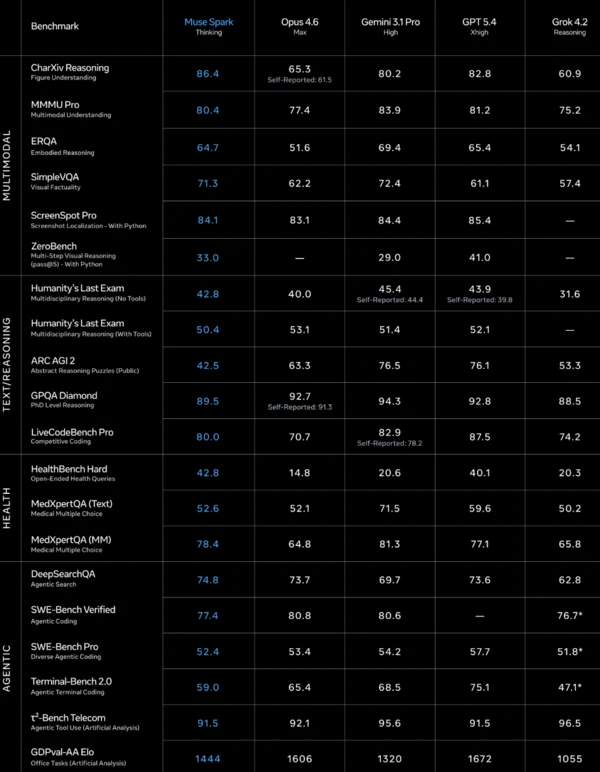
- Meta said it has released a "Contemplating mode" that orchestrates multiple agents in parallel. Meta said Muse Spark can compete with Gemini Deep Think and GPT Pro.
- Muse Spark is focused on multimodal information as well as health. Health appears to be Meta's primary focus in terms of verticals. The company said: "To improve Muse Spark's health reasoning capabilities, we collaborated with over 1,000 physicians to curate training data that enables more factual and comprehensive responses. Muse Spark can generate interactive displays that unpack and explain health information such as the nutritional content of various foods or muscles activated during exercise."
- Meta said Muse Spark was built over the last nine months as it rebuilt its pretraining stack and improved model architecture, optimization and data curation.
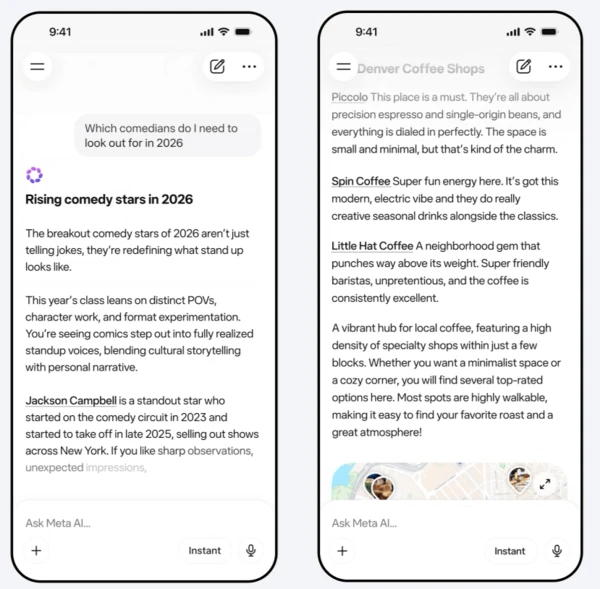
- The company said Muse Spark will be available in the Meta AI app and Meta.ai, which has been updated.
- Meta said that Meta AI will now have a shopping mode.
- Muse Spark will power Meta properties and be offered in private preview via API to select partners.
- No word on whether Muse models will have open-source flavors.
My take:
- Muse Spark gets Meta back into the LLM race, but it'll take time to see the real returns on Mark Zuckerberg's AI spending spree.
- Using Muse models only on the Meta portfolio makes sense on multiple levels. First, Meta can drive monetization and prove out the business case. Second, LLMs are going commodity.
- I'd like to see Meta's Muse models ultimately be used for work.
- I'd also like to see some open source options in the future.
Larry Dignan is Editor in Chief of Constellation Insights at Constellation Research, where he leads editorial coverage focused on enterprise technology, digital transformation, and emerging trends shaping the future of business. He oversees research-driven news, analysis, interviews, and event coverage designed to help technology buyers and vendors navigate complex markets with clarity and context. ...
Read morePublished
Author
