


Microsoft's big idea: Be a good AI neighbor as NIMBY scales
Microsoft is getting ahead of the thing that's most likely to derail AI infrastructure--NIMBY, or not in my back yard.
The company outlined a plan called Community-First AI Infrastructure, which boils down to being a good neighbor and taking steps so AI data centers don't raise electricity prices and deplete resources for locals.
Aside from power, NIMBY is going to be a big hurdle for AI infrastructure. Some communities have embraced AI infrastructure and provided tax breaks only to see local electricity prices surge. For instance, the Northern Virginia area, which is home to multiple data centers with more on deck, has seen electricity prices surge. A variety of news reports have captured local pushback to data center growth.
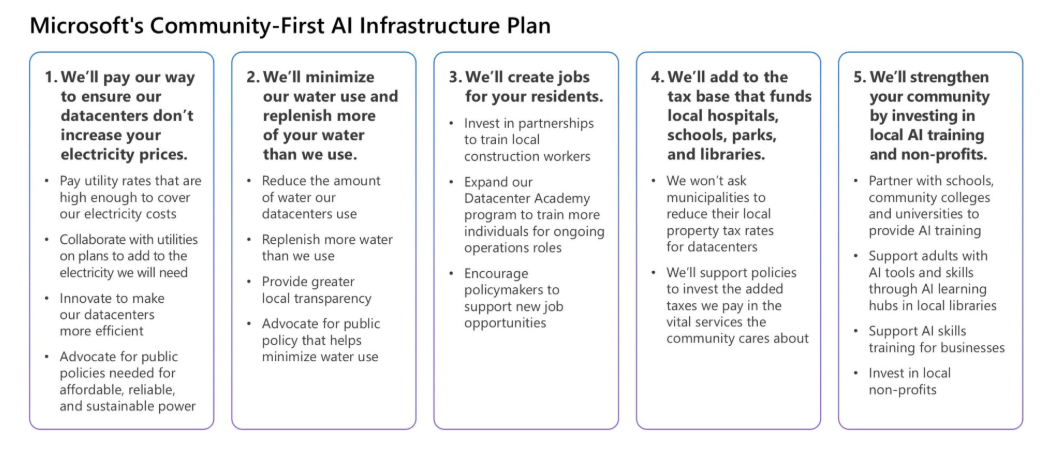
In a blog post, Microsoft outlined the key pillars of its plans. They include:
- Microsoft will pay its own way for power so electricity prices aren't increase. The company said it will pay utility rates to cover its costs, collaborate with utilities to add more power, pursue efficient designs and push for policies for sustainable power.
- The company will minimize its water use and replenish what it uses. Microsoft said it will offer more transparency and reduce the amount of water used by its data centers.
- Microsoft will create jobs and invest in training for local construction workers and operations and partner with libraries, schools and non-profits.
- The company won't ask municipalities for tax breaks for data centers so the money can be used for local services and infrastructure.
Microsoft's approach is getting ahead of what's likely to be a big issue. Look for other AI players to follow. Microsoft said:
"Residential electricity rates have recently risen in dozens of states, driven in part by several years of inflation, supply chain constraints, and long-overdue grid upgrades. Communities value new jobs and property tax revenue, but not if they come with higher power bills or tighter water supplies. Without addressing these issues directly, even supportive communities will question the role of datacenters in their backyard."
Larry Dignan is Editor in Chief of Constellation Insights at Constellation Research, where he leads editorial coverage focused on enterprise technology, digital transformation, and emerging trends shaping the future of business. He oversees research-driven news, analysis, interviews, and event coverage designed to help technology buyers and vendors navigate complex markets with clarity and context. ...
Read morePublished
Author
