NetSuite Manufacturing Moves on Down the Highway
President, Computer Economics and Strativa, Inc.
Computer Economics and Strativa, Inc.
Frank Scavo is skilled at formulating and communicating IT strategy, developing the business case for new systems, and facilitating the selection of enterprise systems, such as ERP, CRM, and supply chain management. He is also an expert in benchmarking IT spending and staffing levels for end-user IT organizations.
Frank was one of the first tech bloggers, beginning in 2002 with his launch of the Enterprise System Spectator providing independent analysis of issues and trends in enterprise applications software and the strengths, weaknesses, advantages, and disadvantages of the vendors that provide them. Frank has been quoted as an IT expert in numerous business and industry publications such as the New York Times, Wall Street Journal, Computerworld, CIO Magazine, ZDnet, eWeek, Datamation,…...
Read more
NetSuite held its annual user conference, Suiteworld, last week, and in his day one keynote, CEO Zach Nelson highlighted "NetSuite for Manufacturing."
I wrote about NetSuite's manufacturing functionality last year in my post, NetSuite Manufacturing: Right Direction, Long Road Ahead. Returning to this subject one year later, it is encouraging to see the progress that NetSuite has made. At the same time, there will be twists and turns that NetSuite will face in continuing down this highway.
If NetSuite is going to continue its growth, reported at 28% last year in its core business, it really has no choice but to pursue manufacturing customers. Manufacturers are the largest market for ERP systems and therefore an attractive target for NetSuite's development efforts. Although manufacturers have been slower to embrace cloud computing than many other sectors have, the situation is rapidly changing. In our ERP vendor selection services at Strativa, we find manufacturing companies increasingly open to cloud ERP. Sometimes, in fact, they only want to look at cloud solutions. In other words, NetSuite is at the right place at the right time.
Balancing New Functionality with Need for Simplicity
To more fully address the needs of manufacturing, NetSuite continues to build out its core functionality, with basic must-have features such as available to promise (ATP) calculations, routings, production orders, and standard costing. In some of the breakout sessions, there were indications of that NetSuite is also exploring functionality that goes well beyond the basics: for example, supply chain management (SCM) and demand-driven MRP (DDMRP).
This leads to the first twist and turn that NetSuite will need to navigate: filling out gaps in manufacturing functionality while not over-engineering the system. Oracle and SAP are famous for having manufacturing systems that are feature-rich, requiring significant time and effort from new customers to decide which features to configure and to implement them. Part of the attraction of NetSuite is its relative simplicity and ease of implementation. If NetSuite wants to remain an attractive option for the likes of small and midsize manufacturers, or small divisions of large companies, it will be wise to pick and choose where to build out the the sophistication of the product.
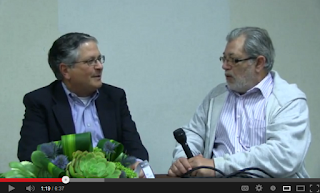
For example, the availability of multi-books accounting (which I discuss briefly in the video at the top of this post) is a good move, as it has widespread applicability to both small and large companies in the manufacturing industries as well as other sectors. But does DDMRP fall into the same category? Moreover, how much SCM functionality do prospects expect from NetSuite, and where does it make sense to partner with best-of-breed specialists, who can better bridge a variety of SCM data sources?
Netsuite's recent success with manufacturers such as Qualcomm, Memjet (discussed later in this post), and others give it real-world customers to validate its product roadmap. It will do well to prioritize new development efforts to the areas where those customers deem most needed. NetSuite may choose, ultimately, to fully move up-market, to become the manufacturing cloud equivalent of SAP or Oracle. But if it does so, there are already a number of other cloud ERP providers, such as Plex, Rootstock, Kenandy, Acumatica, and Keyed-In Solutions, that will be ready to take NetSuite's place serving small and midsize manufacturers.
NetSuite's PLM/PDM Strategy Needs Openness
NetSuite also announced a new alliance with Autodesk to integrate its PLM 360 offering for product lifecycle management with NetSuite's ERP.
By way of background, PLM systems manage the entire life-cycle of product development, from ideation and requirements gathering, through design and development, to release to manufacturing, service, engineering change, and retirement. PLM systems take an engineering view of the product and are generally under the domain of the client's product engineering function. PLM systems generally include product data management (PDM) systems as a subset, to manage all of the product data, such as drawings, specifications, and documentation, which form the definitions of the company's products.
Over the past 20+ years, the integration of PLM and PDM systems with ERP has been a difficult subject. In organizations where engineering and manufacturing work well together, basic roles and responsibilities can be defined and proper integration of data can be accomplished. In organizations where such cross-functional processes are weak, PLM/PDM and ERP often form separate silos.
Autodesk's PLM 360 shows very well, and the story about its cloud deployment matches well with NetSuite. However, it is my observation that the majority of manufacturers would do well simply to establish simple integration between their engineering bills of material (within their PLM/PDM systems) and their manufacturing bills of material (within their ERP systems). Making engineering documentation within the PLM/PDM system available to manufacturing ERP users is also highly desired. Furthermore, there are few engineering organizations that have not already standardized on a PLM/PDM system (e.g PTC's Windchill, Solidworks, and others), and they will seldom be willing to migrate to Autodesk just because the company is implementing NetSuite's ERP.
This is another turn of the highway that NetSuite must navigate: will it offer standard integration to a variety of PLM/PDM systems, or will its answer to engineering integration be, "Go with Autodesk?" I do not believe that an Autodesk-only, or even an Autodesk-preferred, strategy is the best.
Case Studies Encouraging
To validate its progress in the manufacturing sector, NetSuite reported on several case studies.
- At the large end of the spectrum there was Qualcomm, the $19 billion manufacturer of semiconductors and other communications products. Although Qualcomm has Oracle E-Business Suite running throughout much of its operations worldwide, in 2011 CIO Norm Fjeldheim chose NetSuite for use in smaller divisions, based on the need for implementation speed and agility. As part of that strategy, Qualcomm has now gone live with NetSuite in a newly launched division in Mexico. This is a nice "existence proof" for a two-tier ERP strategy in a very large company.
- At the smaller end of the spectrum there was Memjet, a manufacturer if high-speed color printer engines. Martin Hambalek, the IT director at Memjet, did a short on-stage interview during Nelson's day one keynote. Although the company has just 350 employees, it has engineering and manufacturing operations in five countries. Unlike Qualcomm, Memjet runs NetSuite as its only ERP system worldwide, showing NetSuite's capabilities for multinational businesses. Notably, Memjet is also a customer of Autodesk for its PLM 360 system, mentioned earlier. In my one-on-one interview with Hambalek later during the conference, I learned that he is the only full-time IT employee at Memjet: evidence that a full or largely cloud-based IT infrastructure requires many fewer IT resources to maintain.
Customer stories are the best way to communicate success, and these two NetSuite customers substantiate NetSuite's progress.
Rethinking the Services and Support Strategy
As much as ERP functionality is important to manufacturers, there is another element of success that is even more important: the quality of a vendor's services and support. It struck me during the keynotes that, apart from an announcement of Capgemini as a new partner, there were no announcements about NetSuite's professional services.
More ERP implementations fail due to problems with implementation services than because of gaps in functionality. Functional gaps can be identified during the selection process: but problems with the vendor's implementation services are more difficult to discern before the deal is signed. Furthermore, functional gaps can often be remedied through procedural workarounds. But once the implementation is underway, failures in implementation services are difficult to remedy. Sometimes, such failures wind up in litigation.
In this regard, NetSuite's rapid growth has a downside: it stretches and strains the ability of NetSuite's professional services group to spend adequate time and attention on its customers' implementation success. In advising prospective ERP buyers, I have much more concern about what their implementation experience will be than I do about any potential gaps in NetSuite functionality.
One solution is to build a strong partner channel of VARs, resellers, and implementation service providers to complement or even take over responsibility for post-sales service and support.
During the analyst press conference, I asked Zach Nelson about this point. NetSuite is building its partner channel, but how does it decide what work should go to its implementation partners and what part should be retained for NetSuite's own professional services group? Nelson's answer reflected a traditional view, that whoever brings the sales lead to NetSuite should get the services. In other words, if a lead comes through NetSuite's own sales team, NetSuite should get the services work. If the lead comes through a partner, the partner should get the services.
As an advisor to prospective buyers, my own view is that NetSuite should rethink this strategy. The party that happens to find the prospect may not be the best party to deliver the services. In fact, NetSuite may be better served by passing off implementation services to local partners that are willing to spend more time with the customer on-site than NetSuite's own professional services group may be able to provide.
At the end of his answer, Nelson indicated that he would actually prefer that NetSuite not be in the professional services business. If so, this is good news. Let NetSuite focus on developing and delivering cloud ERP, and let a well-developed partner channel compete to provide hands-on implementation services. What professional services NetSuite does provide would be better focused on providing support to those partners.
Just before leaving the conference, I gave Dennis Howlett my initial thoughts in this video interview on NetSuite Manufacturing and multi-book accounting.
Disclosure: NetSuite paid my travel expenses to attend its user conference. They also gave me a swag bag.
Related Posts
NetSuite Manufacturing: Right Direction, Long Road Ahead.
Tech Optimization
Innovation & Product-led Growth
Future of Work
netsuite
SaaS
PaaS
IaaS
Cloud
Digital Transformation
Disruptive Technology
Enterprise IT
Enterprise Acceleration
Enterprise Software
Next Gen Apps
IoT
Blockchain
CRM
ERP
CCaaS
UCaaS
Collaboration
Enterprise Service
Chief Information Officer
Chief Supply Chain Officer
Chief Technology Officer
Chief Digital Officer
Chief Data Officer
Chief Analytics Officer
Chief Information Security Officer
Chief Executive Officer
Chief Operating Officer





 We at Constellation Research are pleased to kick off the third annual