Results

Meta said its variable interest entity (VIE) partnership with Blue Owl Capital to develop its Hyperion data center campus was flagged by its auditor Ernst & Young.

The company's joint venture with Blue Owl Capital was announced in October. Under the partnership, Blue Owl Capital will own 80% of the joint venture and Meta will own 20%. The deal covered $27 billion in total Hyperion development costs.

At the time, the deal made me go hmmm since it was fairly obvious Meta didn't want the costs on its balance sheet. The Wall Street Journal spotted the Ernst & Young disclosure in Meta's 10-K filing. "Auditing the Company’s determination of the primary beneficiary of the VIE was especially challenging due to the significant judgment required in determining the activities that most significantly affect the VIE’s economic performance based on the purpose and design of the entity and assessing whether the Company has the power to direct those activities," said Meta.

Yes, off balance sheet arrangements are complicated.

Meta said it addressed the VIE in its audit. "We obtained an understanding, evaluated the design and tested the operating effectiveness of controls over the Company’s determination of the primary beneficiary of the VIE, including controls relating to the determination of the activities that most significantly affect the VIE’s economic performance and assessing which party has the power to direct those activities," said Meta.

Bottom line: VIE arrangements are already under scrutiny. You can expect more with AI capex surging. And while we’re at it depreciation expenses are hotly debated too.

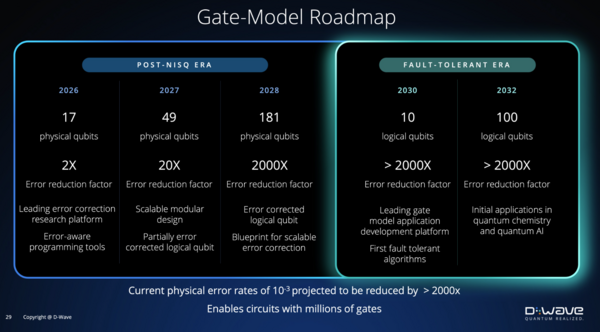
Classiq, a quantum software company, said it has released Classiq 1.0, the milestone release for its quantum computing engineering and development platform.

Features in Classiq 1.0 include hardware aware execution across simulators and QPUs, debugging transparency, support for generative quantum function and correct-by-construction enforcement.

Classiq last year raised $110 million in funding.

Classiq 1.0


Cloudflare posted fourth quarter revenue of $614.5 million, up 34% from a year ago, with adjusted earnings per share of 28 cents, a penny ahead of estimates.

The company projected first quarter revenue of $620 million to $621 million, well above the $614 million Wall Street estimate. For 2026, Cloudflare projected revenue of $2.785 billion to $2.795 billion, above the $2.74 billion consensus estimate.

Matthew Prince, CEO of Cloudflare, said in a statement that the company's network is seeing more traffic due to AI. "If agents are the new users of the web, Cloudflare is the platform they run on and the network they pass through. This creates a virtuous flywheel: more agents drive more code to Cloudflare Workers, which fuels demand for our performance, security, and networking services," said Prince.

Cloudflare network

Teradata reported fourth quarter earnings of 38 cents a share on revenue of $421 million, up 3% from a year ago. Non-GAAP earnings were 74 cents a share, 18 cents a share above estimates. CEO Steve McMillan said the company's Autonomous AI and Knowledge platform is seeing strong demand.

For 2025, Teradata reported earnings of $1.35 a share on revenue of $1.66 billion, down 5% from a year ago. For 2026, Teradata projected revenue to fall 2% or be flat.

Kyndryl's third quarter earnings missed estimates, and the company named a new CFO. Separately, Kyndryl said its accounting is being reviewed by the Securities and Exchange Commission. Kyndryl shares were halved.

The company reported third quarter net income of $57 million, or 25 cents a share, on revenue of $3.9 billion, up 3% from a year ago. Non-GAAP earnings were 52 cents a share compared to Wall Street estimates of 60 cents a share.

In addition, Kyndryl said it has named Harsh Chugh interim CFO. Kyndryl also replaced its general counsel and corporate controller.

In an SEC filing, Kyndryl said it couldn't file its quarterly report on time. "The Company, through the Audit Committee of its Board of Directors, is reviewing its cash management practices, related disclosures (including regarding the drivers of the Company’s adjusted free cash flow metric), the efficacy of the Company’s internal control over financial reporting, and certain other matters following the Company’s receipt of voluntary document requests from the Division of Enforcement of the Securities and Exchange Commission (“SEC”) relating to such matters," said Kyndryl. "Due to this review, the finalization of the Quarterly Report, including the Company’s assessment of internal control over financial reporting, requires additional time to complete."

Siddhant Khare riffed on AI fatigue from a software developer's view. The upshot is he shipped more code than ever, but is also more drained than ever.

Before AI, my job was: think about a problem, write code, test it, ship it. I was the creator. The maker. That's what drew most of us to engineering in the first place - the act of building.

After AI, my job increasingly became: prompt, wait, read output, evaluate output, decide if output is correct, decide if output is safe, decide if output matches the architecture, fix the parts that don't, re-prompt, repeat. I became a reviewer. A judge. A quality inspector on an assembly line that never stops.

This is a fundamentally different kind of work. Creating is energizing. Reviewing is draining.

Strategy's fourth quarter earnings featured a bevy of interesting tidbits given Bitcoin's fall.

Here's a look:

  • Strategy held 713,502 bitcoin holdings at a total cost of $54.26 billion, or $76,052 per bitcoin. "We now hold 640,808 Bitcoin or over 3% of all Bitcoin ever exist. This reinforces the scale and the dominance of our corporate Bitcoin treasury company," said Strategy CFO Andrew Kang.
  • Net loss in the fourth quarter was $12.4 billion, or $42.93 per share.
  • Executive Chairman Michael Saylor said Bitcoin is digital gold and it's just peachy for leverage and credit. "Now what do you do with digital gold? Well, what do you do with gold? You issue credit on gold. For 300 years, the Western world ran on gold-backed credit. Bitcoin is digital gold. What we've realized is that the killer application of digital capital is digital credit," said Saylor.
  • "Clearly, with equity, I would say, if you're going to own Bitcoin you need a four-year or longer time horizon. If you're going to own amplified Bitcoin, a company that aims to be more volatile than Bitcoin, you can't have a lower time horizon. So, you probably need a longer time horizon. So, we manage the company such that we think 10 years from now, we're going to create an insane amount of shareholder value," said Saylor.

He elaborated:

"I want MSTR to stand for monster. We want to create a monster company. We don't want to careen toward the future with an advantage. We don't want to be the talented fighter that kind of wins and loses and mostly wins and is a little bit sloppy on disciplined...

I don't want to be the dude that made a good trade that made $25 billion or made $50 billion by trading Bitcoin by using cheap corporate money.

We don't want to be the company the made $25 billion or $50 billion or a Hail Mary or maybe we lost it by whatever borrowing money, however we can get it to buy Bitcoin. We want to be the company that provided a comfortable retirement to 1 billion people and changed the world."